Skip to content
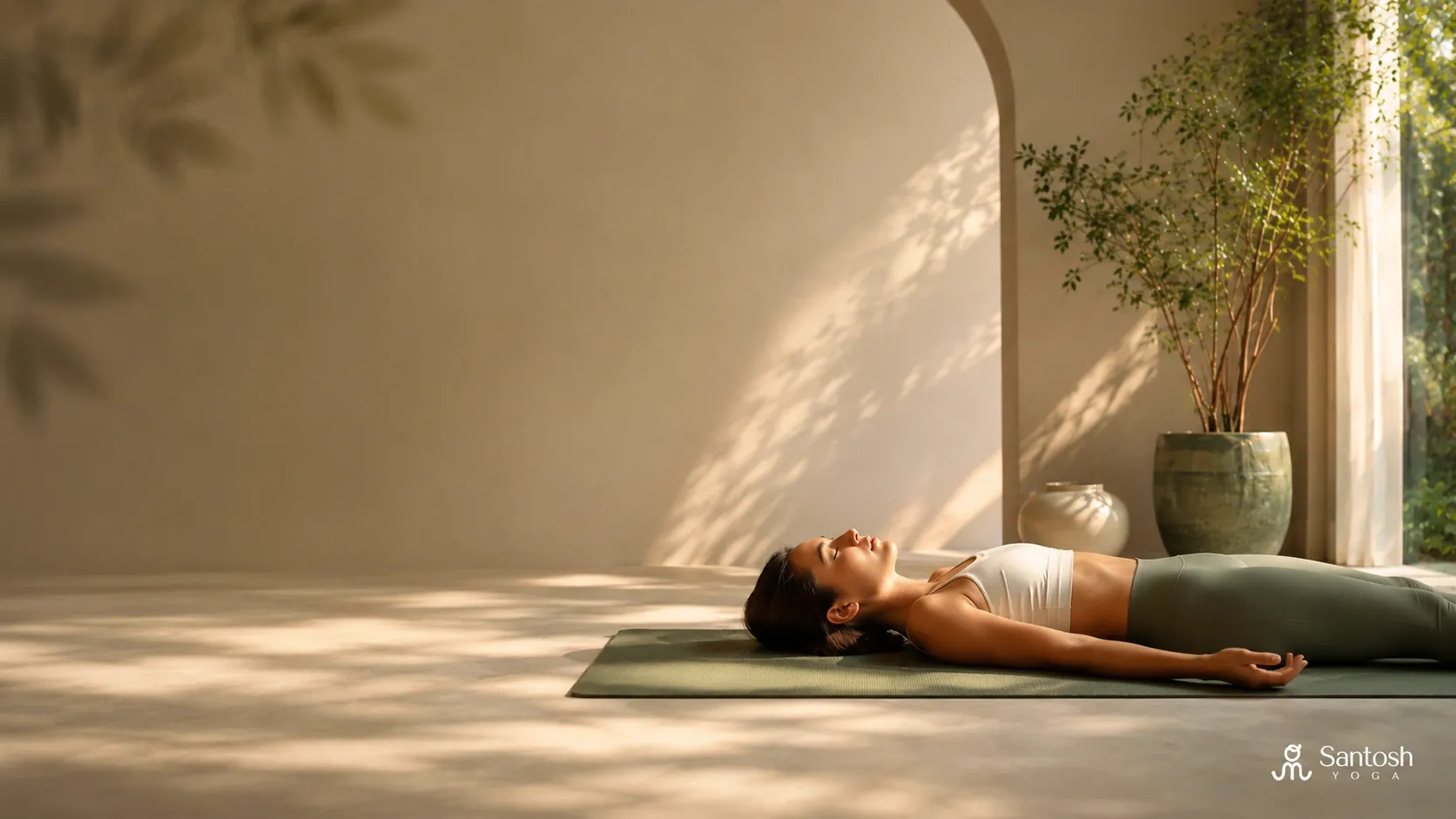

Burnout rarely arrives all at once.
For most people, it builds quietly in the background. What begins as a busy season turns into months of constant pressure. Rest becomes something you postpone. Recovery becomes something you plan to do later. Eventually, the body continues moving, but the sense of energy, motivation and clarity that once fueled your work starts to fade.
Many founders, executives and high performing professionals know this feeling well.
You may still be productive. You may still be meeting deadlines. But underneath the activity, there is often a growing sense of depletion that a weekend off or an extra cup of coffee does not seem to fix.
This is where Yoga Nidra may offer something valuable.
Unlike productivity strategies that focus on doing more efficiently, Yoga Nidra focuses on recovery. It is a guided practice designed to help the nervous system shift out of a constant state of activation and into a state that supports rest, regulation and restoration.
For people experiencing chronic stress, mental fatigue or an overactive mind, yoga nidra for burnout can become a practical tool for creating the kind of recovery that modern life often neglects. If you are also dealing with sleep difficulties alongside burnout, our guide on yoga nidra for insomnia explores how guided deep rest may support both.
Table of Contents
What Burnout Actually Does to Your Nervous System
Most people think burnout is simply exhaustion.
In reality, burnout is often a nervous system issue as much as an energy issue.
When stress continues for weeks or months without adequate recovery, the body adapts. It becomes increasingly efficient at staying alert, responsive and ready to react. While this can be useful during short periods of pressure, problems begin when that state becomes chronic.
Many people experiencing burnout describe feeling tired and wired at the same time.
They struggle to relax even when opportunities for rest are available. They feel mentally busy while physically exhausted. Sleep may become less restorative. Focus becomes harder to sustain. Small problems require more effort than they once did.
From a physiological perspective, the nervous system may spend too much time in a state associated with vigilance and activation and too little time in the states responsible for recovery and repair.
This matters because chronic stress affects more than energy levels alone. As we explore in our article on stress and cellular aging, long term stress exposure may influence recovery processes throughout the body.
This helps explain why traditional advice often feels ineffective.
People are told to take a day off, sleep more or go on vacation. Yet many discover that even when they stop working, their mind continues operating at full speed.
The issue is not simply a lack of time away from work.
The issue is that the nervous system has forgotten how to downshift.
This becomes especially relevant for leaders, founders and professionals whose work requires constant decision making. The brain becomes accustomed to solving problems every waking hour, making true recovery increasingly difficult.
That is why effective burnout recovery often requires more than rest alone. It requires practices that actively support nervous system regulation and help create space for genuine recovery.
Why Most Recovery Advice Does Not Work

When people start experiencing burnout, the advice they receive is usually predictable.
Take a weekend off. Sleep more. Book a vacation. Work less.
While these suggestions are well intended, they often fail to address the real problem.
The challenge is not always the absence of rest. The challenge is the inability to access it.
Many professionals discover this the hard way. They finally take time off, yet spend the entire weekend checking emails. They sit down to relax, but their mind immediately starts reviewing tasks, solving problems or planning the next week. Even during vacations, they struggle to feel fully present.
What often happens is that the body has stopped working, but the nervous system has not.
This is one reason burnout can feel so frustrating. You may be doing all the things that are supposed to help, yet still feel mentally exhausted and emotionally depleted.
Recovery is not simply about stopping activity. It is about creating conditions where the body and mind can genuinely shift out of survival mode.
For many people, that requires more than passive rest. It requires intentional practices that help calm an overactive nervous system and create space for deeper recovery.
How Yoga Nidra Addresses Burnout at the Root
One reason Yoga Nidra has become increasingly popular among high performing professionals is that it approaches recovery differently.
Most recovery strategies focus on changing external circumstances. Yoga Nidra focuses on changing your internal state.
The practice involves lying down comfortably and following a guided sequence of awareness, breath observation and relaxation techniques. On the surface, it sounds simple. Yet many people are surprised by how different they feel afterward.
This is because Yoga Nidra does not ask you to force relaxation.
Instead, it creates an environment where relaxation can happen naturally.
Many people experiencing burnout spend most of their day in a state of constant mental engagement. They are solving problems, making decisions, responding to requests and switching between tasks. Over time, the brain becomes accustomed to remaining active at all times.
Even when the workday ends, that momentum often continues.
Yoga Nidra interrupts this pattern.
By systematically guiding awareness through the body and away from constant mental activity, the practice may help reduce the sense of internal pressure that many burned out professionals carry. Attention gradually shifts from planning and problem solving toward bodily awareness and deep recovery.
Research exploring relaxation based practices suggests that regular deep rest may support stress management, emotional regulation and recovery. While Yoga Nidra is not a treatment for burnout, many practitioners report feeling calmer, clearer and more mentally refreshed after consistent practice.
If chronic stress has been building for some time, our guide on yoga for stress relief explores additional practices that may help support nervous system recovery and emotional balance.
Burnout often develops when stress exceeds recovery for too long. Yoga Nidra may help restore some of that missing balance.
A Simple Yoga Nidra Practice for Burnout Recovery

One of the advantages of Yoga Nidra is that it does not require physical effort.
In fact, the practice works best when you stop trying so hard.
If you are feeling depleted, mentally overwhelmed or emotionally exhausted, start with a simple approach.
Step 1: Create a Pause
Choose a time when you are unlikely to be interrupted. Many people practice in the afternoon, after work or before bed.
Silence notifications and step away from anything demanding your attention.
For the next 20 to 30 minutes, your only responsibility is to rest.
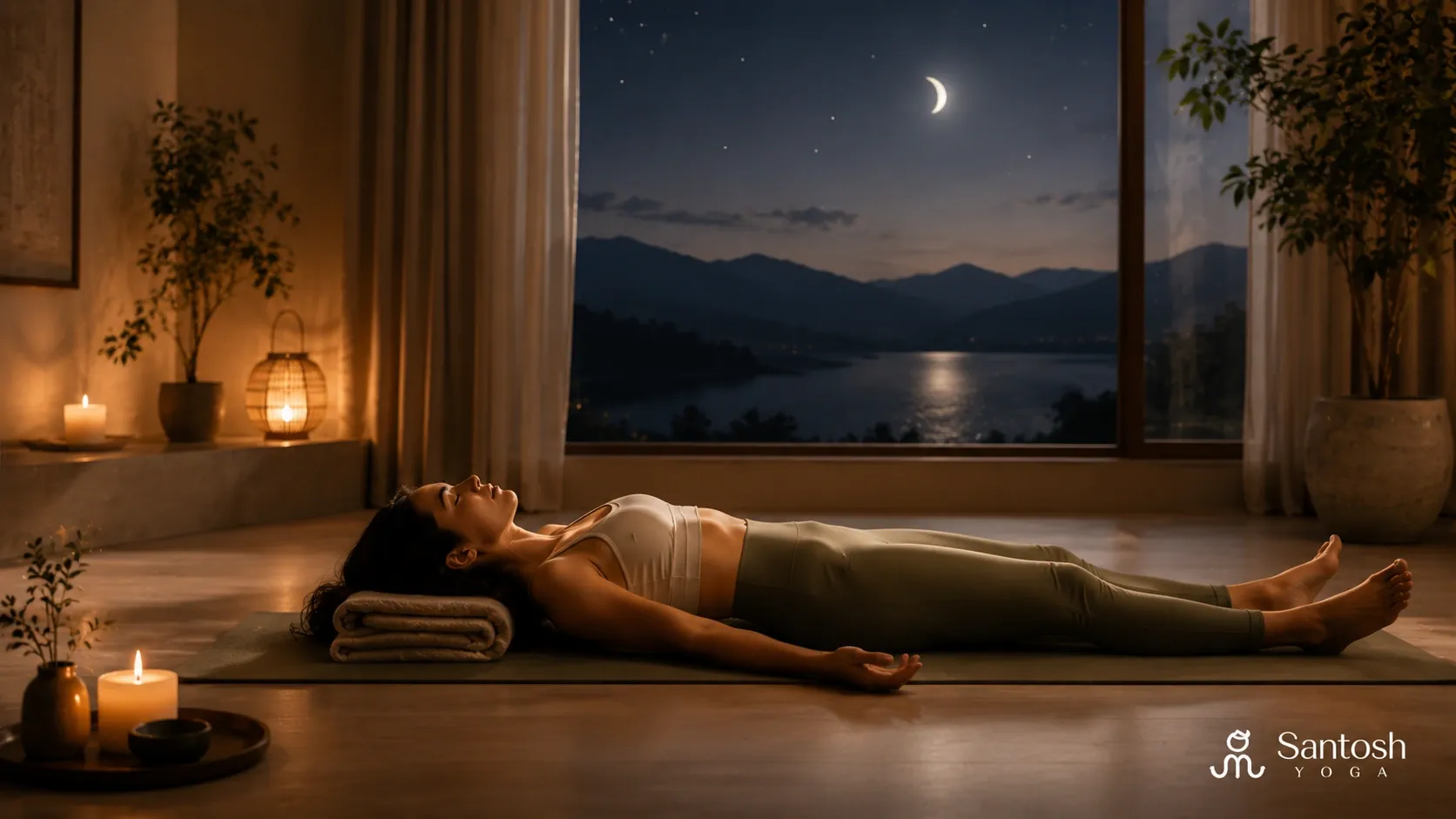
Step 2: Lie Down Comfortably
Find a comfortable position on a yoga mat, bed or couch.
Support your head or knees with cushions if needed. Physical comfort helps the body settle more easily.
Step 3: Use a Guided Session
Beginners often find guided recordings much easier than practicing alone. A structured session provides enough direction to keep the mind engaged without requiring effort. Our Yoga Nidra for Longevity session is a 45-minute guided practice specifically designed for deep rest and nervous system recovery.
Step 4: Follow the Instructions Gently
As the session begins, allow your attention to follow the guidance.
You may be asked to notice different areas of the body, observe your breathing or visualise simple images.
There is no need to concentrate perfectly.
If your attention drifts, simply return to the instructions when you notice.
Step 5: Let Go of Expectations
Many professionals approach recovery the same way they approach work: they want results immediately.
Yoga Nidra works differently.
The goal is not to achieve a particular outcome. The goal is to create space for recovery.
Some sessions may leave you feeling deeply relaxed. Others may simply help you feel slightly calmer than before.
Both experiences are valuable.
Step 6: Return Slowly
When the session ends, give yourself a few moments before rushing back into activity.
Notice how your body feels.
Notice how your breathing feels.
Even a brief period of deep rest can create a meaningful shift in how you move through the rest of the day.
Ready to begin your recovery?
Try our 45-minute Yoga Nidra for Longevity session; a guided practice designed to support deep relaxation, nervous system recovery and restful sleep. No experience needed.
What to Expect in the First 2 Weeks
One of the biggest misconceptions about burnout recovery is that it should happen quickly.
In reality, recovery often happens gradually.
During your first few Yoga Nidra sessions, you may simply notice how tired you actually are. Many high performing professionals spend so much time pushing through fatigue that they lose touch with how much stress their body has been carrying.
Some people feel deeply relaxed after their first session. Others find it surprisingly difficult to slow down. Both experiences are normal.
During the first week, you may notice:
- reduced mental tension
- easier transitions between work and rest
- improved awareness of stress levels
- brief periods of calm throughout the day
By the second week, many practitioners report feeling less reactive to everyday stressors and more capable of stepping out of constant problem solving mode. Some also notice improvements in sleep quality, focus and overall recovery.
The goal is not to eliminate stress completely.
The goal is to create more opportunities for the nervous system to recover from it.
Think of Yoga Nidra the same way you would physical training. A single workout rarely changes fitness levels. Consistent practice over time is where meaningful adaptation occurs.
Approach the first two weeks with curiosity rather than expectations. Small shifts often become significant changes when given enough time to develop.
Frequently Asked Questions
Can Yoga Nidra help with burnout?
Yoga Nidra is not a treatment for burnout, but it may help support recovery by promoting deep relaxation and helping the nervous system shift out of a prolonged state of stress. Many people use yoga nidra for burnout as part of a broader wellness routine.
How often should I practice Yoga Nidra for burnout recovery?
Consistency is more important than duration. Many practitioners benefit from practicing 20 to 45 minutes several times per week. During periods of high stress, some choose to practice daily.
What if I fall asleep during Yoga Nidra?
This is completely normal, especially for people experiencing significant fatigue. Falling asleep often indicates that the body needs rest. Over time, you may remain awake for more of the practice while still experiencing deep relaxation.
Is Yoga Nidra the same as meditation?
Not exactly. While both involve awareness and relaxation, Yoga Nidra follows a structured guided process specifically designed to encourage deep rest. Many people find it easier to follow than traditional meditation.
Can Yoga Nidra help with an overactive mind?
Many practitioners report that Yoga Nidra helps reduce mental noise by giving the mind a simple structure to follow. Rather than trying to stop thoughts, the practice gently redirects attention away from constant analysis and planning.
How quickly will I notice results?
Some people feel calmer after a single session. For others, the benefits develop gradually over several weeks of consistent practice. Recovery is rarely immediate, but regular practice may help support long term resilience and stress management.
How is yoga nidra for burnout different from regular rest?
Unlike passive rest where the mind often continues running, Yoga Nidra provides structured guidance that actively helps the nervous system shift into a recovery state. You can explore the science behind this in our guide on what is NSDR.
Final Thoughts
Burnout rarely comes from working hard for a few days.
It usually develops when stress accumulates faster than recovery for weeks, months or even years.
The solution is not always doing less. Sometimes it is learning how to recover more effectively.
Yoga Nidra offers a practical way to create space for that recovery. It does not require special equipment, extensive training or hours of free time. It simply provides an opportunity to step out of constant mental activity and allow the nervous system to rest.
For founders, executives and professionals who spend most of their lives solving problems, that pause can be surprisingly powerful.
Recovery is not something that happens after everything is finished.
It is something that needs to be built into the process.
Start your recovery with our Yoga Nidra for Longevity session; a guided practice designed to support deep relaxation, recovery and nervous system restoration.
Medical Disclaimer: This article is intended for educational and wellness purposes only. Yoga Nidra is a relaxation practice that may support stress management and recovery, but it is not intended to diagnose, treat, cure or prevent any medical or psychological condition. If you are experiencing severe burnout, anxiety, depression or other health concerns, consult a qualified healthcare professional.