Skip to content
If you have been searching for a yoga nidra script that you can use for personal practice or teaching, you are not alone. As more people discover the benefits of deep relaxation, Yoga Nidra has become one of the most accessible practices for reducing stress, improving sleep and creating space for genuine rest.
Unlike traditional meditation, Yoga Nidra does not require concentration or physical effort. You simply lie down comfortably and follow guided instructions that gradually lead the body and mind into a deeply relaxed state. Many practitioners describe the experience as conscious rest, a place somewhere between wakefulness and sleep.
Whether you are a yoga teacher looking for a class script or someone exploring the practice for the first time, this guide contains a complete free yoga nidra script that can be adapted for different needs and experience levels.
Table of Contents
What Makes a Good Yoga Nidra Script?
At first glance, Yoga Nidra appears simple. Yet behind every effective practice is a carefully designed sequence that gently guides awareness inward without creating tension or effort.
A traditional yoga nidra guided meditation script usually includes several stages:
Preparation and Relaxation

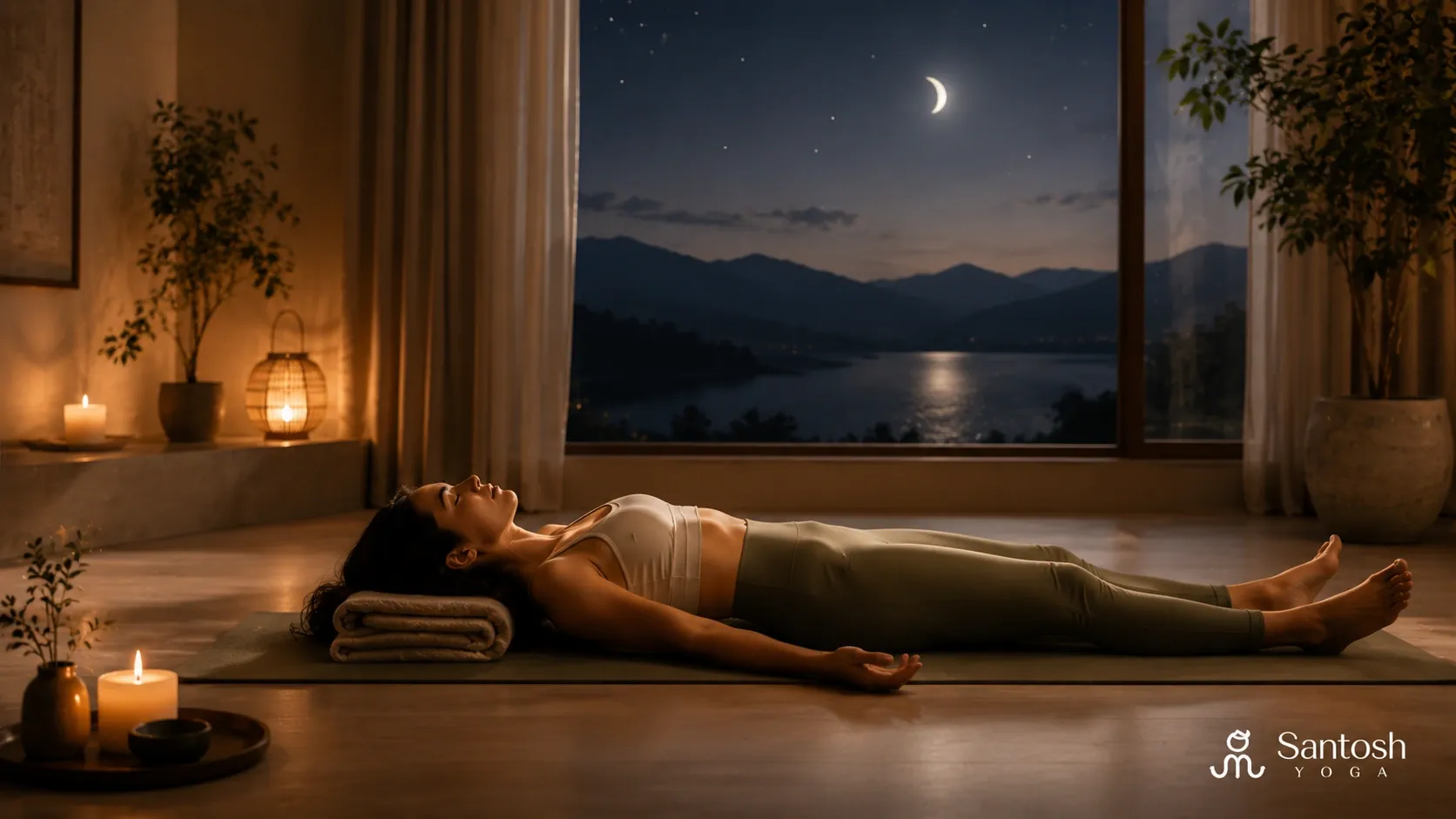
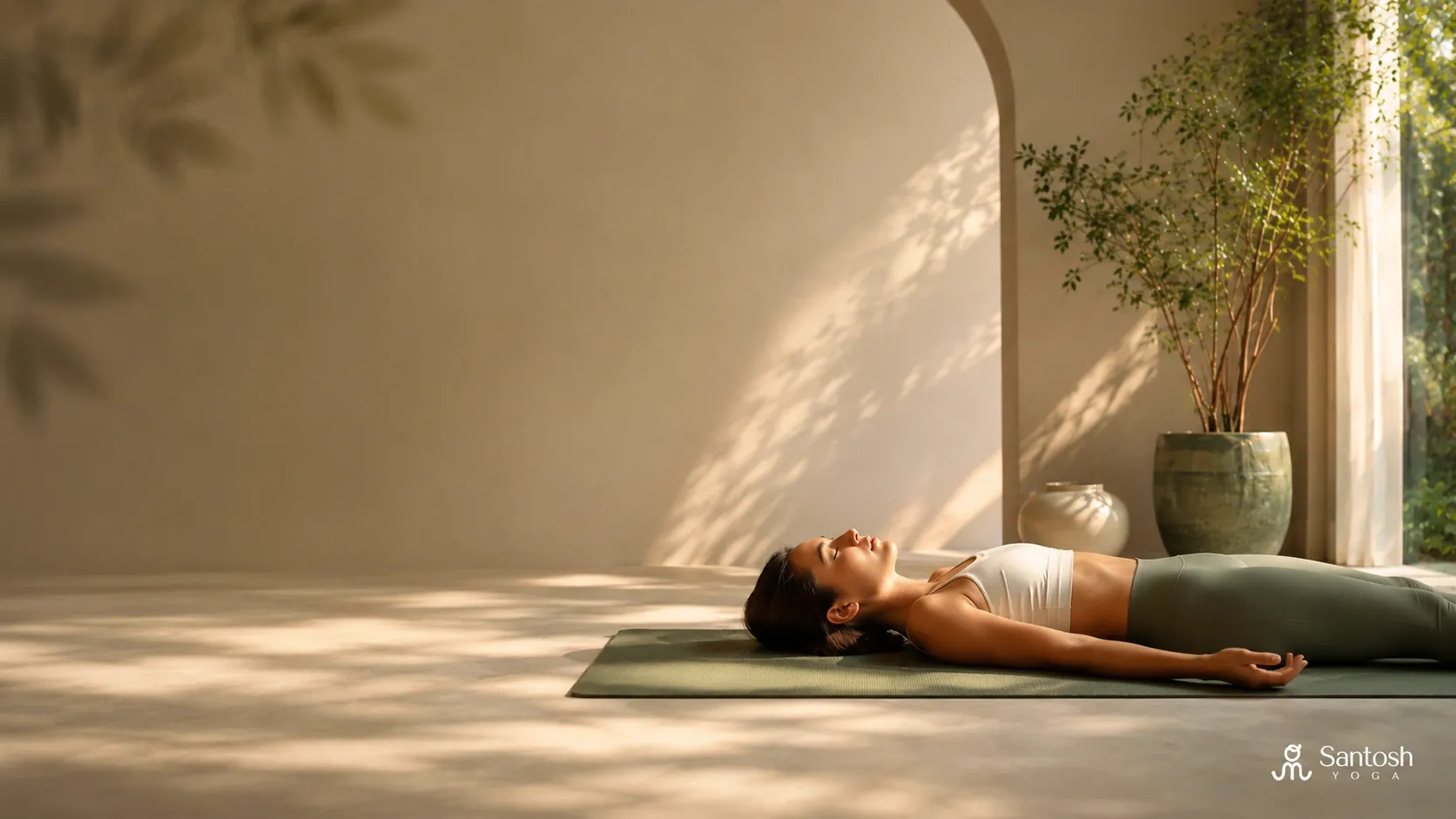
The practitioner settles into a comfortable position, often lying in Shavasana. Physical comfort is important because unnecessary movement can interfere with deep relaxation.
Sankalpa
A sankalpa is a short intention or heartfelt affirmation repeated at the beginning and end of the practice. Rather than being a goal to achieve, it serves as a gentle reminder of what matters most.
Rotation of Awareness
This stage systematically moves awareness through different parts of the body. The process encourages the mind to let go of constant thinking and become absorbed in present moment sensation. This is sometimes called the yoga nidra body scan script.
Breath Awareness
Attention is directed toward the natural flow of breathing. Nothing is forced. The breath simply becomes an anchor for awareness.
Opposite Sensations and Visualisation
Many traditional scripts introduce experiences such as heaviness and lightness, warmth and coolness, or peaceful imagery. These techniques help deepen relaxation and encourage emotional balance.
Returning to Wakefulness
The session concludes gradually, allowing awareness to return to the external environment without abrupt transitions.
Although the structure remains largely the same, teachers often adapt the language depending on whether the session is intended for stress relief, sleep support or deep recovery. You may also come across modern terms such as Non-Sleep Deep Rest. Our guide on what is NSDR explores how these contemporary concepts relate to traditional Yoga Nidra and why both approaches share the same emphasis on conscious relaxation and recovery.
Who This Script Is For
This yoga nidra script is suitable for:
- Yoga teachers who need a structured script to guide their students in class or workshops
- Practitioners who want to record themselves reading it and listen back during their own practice
- Complete beginners who are exploring yoga nidra for the first time and want to understand what a session involves
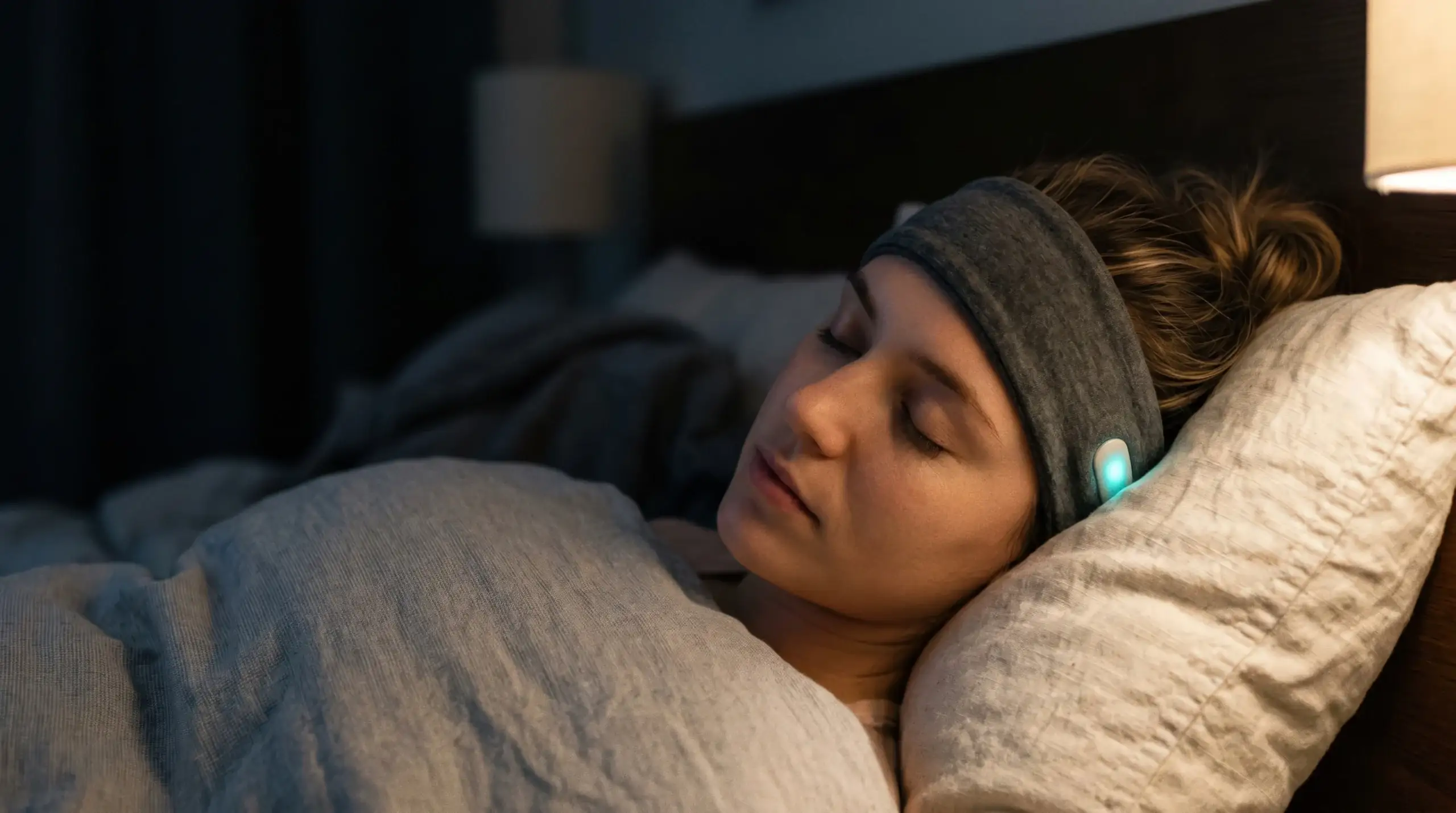
- People using yoga nidra for sleep who want a script specifically paced for bedtime use
If you are using this script to support sleep, you may also find our guide on yoga nidra before bed helpful. For those dealing with ongoing sleep difficulties, our article on yoga nidra for insomnia explores how guided deep rest may support healthier sleep patterns over time.
How to Use This Script
One of the strengths of Yoga Nidra is its flexibility.
If you are practicing alone, you can record the script in your own voice or read through it beforehand and follow the sequence from memory. Some people prefer listening to guided recordings, especially in the beginning.
Others may turn to Yoga Nidra for specific concerns. Practitioners exploring yoga nidra for anxiety often use guided sessions as part of their evening routine, while those focused on deep recovery may combine it with yoga for deep recovery practices.
Teachers often use a complete yoga nidra script as a framework while allowing their natural voice and pacing to shape the experience. Silence is just as important as words. There is no need to rush.
Most sessions last between 20 and 40 minutes, though shorter practices can also be effective.
Before beginning:
- Find a quiet space
- Lie down comfortably
- Use blankets or cushions for support
- Dim the lights if possible
- Allow yourself permission to rest
The goal is not to force relaxation.
The goal is to create conditions where relaxation can happen naturally.
For many practitioners, Yoga Nidra becomes part of a larger approach to long term wellbeing and recovery. This is one reason many people explore Yoga Nidra for Longevity as a way of integrating deep rest into everyday life.
A Complete Yoga Nidra Script: 20 to 25 Minutes
For teachers: read slowly and evenly. Pause where indicated. Allow silence to do as much work as the words.
For solo practitioners: record yourself reading this script and listen back, or read through it once before beginning.
Part 1: Settling the Body
Allow your body to settle into the ground beneath you.
[Pause — 5 seconds]
You do not need to do anything right now. You do not need to go anywhere. For the next few minutes, your only task is to be still and listen.
[Pause — 5 seconds]
Feel the weight of your body against the surface beneath you. Notice the points where your body makes contact with the floor. Your heels. Your calves. The backs of your thighs. Your lower back. Your shoulder blades. The back of your head.
[Pause — 8 seconds]
Wherever there is contact, allow the body to release a little more. You do not need to hold yourself up. The ground will support you completely.
[Pause — 8 seconds]
Now become aware of the space around your body. The air above you. The space to your left. The space to your right.
[Pause — 5 seconds]
Allow your eyes to remain gently closed. Soften the muscles around your eyes. Let your jaw release. Let your tongue rest gently on the floor of your mouth.
[Pause — 8 seconds]
Take a single slow breath in through the nose.
[Pause — 3 seconds]
And let it go completely.
[Pause — 5 seconds]
Again. Breathe in slowly.
[Pause — 3 seconds]
And release.
[Pause — 8 seconds]
Allow the breath to return to its natural rhythm. You do not need to control it from here.
[Pause — 10 seconds]
Part 2: Setting Your Intention (Sankalpa)
Before we continue, bring to mind your sankalpa.
[Pause — 3 seconds]
A sankalpa is a short, clear intention. It may be something you are working toward in your life, or simply a quality you wish to cultivate. Peace. Steadiness. Clarity. Health.
[Pause — 5 seconds]
If a sankalpa comes to mind naturally, hold it gently. If nothing comes, simply use: I am at rest.
[Pause — 5 seconds]
Repeat your sankalpa three times internally, with full attention.
[Pause — 15 seconds]
Now let it go. The seed has been planted. We move forward.
[Pause — 5 seconds]
Part 3: Rotation of Awareness (Body Scan)
Read each body part with a natural pause of 2 to 3 seconds between each one. Do not rush.
We will now move awareness through the body, part by part. Simply allow your attention to follow the words. There is nothing to visualise and nothing to feel. Simply hear the name of each part and let your awareness rest there briefly before moving on.
[Pause — 5 seconds]
Right hand thumb. Second finger. Third finger. Fourth finger. Little finger. Palm of the right hand. Back of the right hand. Right wrist. Right forearm. Right elbow. Right upper arm. Right shoulder. Right armpit. Right side of the chest. Right side of the waist. Right hip. Right thigh. Right knee. Right calf. Right ankle. Right heel. Sole of the right foot. Right big toe. Second toe. Third toe. Fourth toe. Little toe.
[Pause — 5 seconds]
Left hand thumb. Second finger. Third finger. Fourth finger. Little finger. Palm of the left hand. Back of the left hand. Left wrist. Left forearm. Left elbow. Left upper arm. Left shoulder. Left armpit. Left side of the chest. Left side of the waist. Left hip. Left thigh. Left knee. Left calf. Left ankle. Left heel. Sole of the left foot. Left big toe. Second toe. Third toe. Fourth toe. Little toe.
[Pause — 5 seconds]
Lower back. Middle back. Upper back. The whole spine. Right shoulder blade. Left shoulder blade. Back of the neck. Back of the head.
[Pause — 5 seconds]
Top of the head. Right temple. Left temple. Right ear. Left ear. Right eyebrow. Left eyebrow. Space between the eyebrows. Right eyelid. Left eyelid. Right eye. Left eye. Right nostril. Left nostril. Tip of the nose. Right cheek. Left cheek. Upper lip. Lower lip. Chin. Throat. Right side of the chest. Left side of the chest. Centre of the chest. Upper abdomen. Navel. Lower abdomen.
[Pause — 8 seconds]
Become aware of the whole body at once.
[Pause — 10 seconds]
The whole body resting. The whole body relaxed.
[Pause — 10 seconds]
Part 4: Breath Awareness
Now bring your awareness to the breath.
[Pause — 5 seconds]
Do not change the breath. Simply observe it.
[Pause — 5 seconds]
Notice the breath entering through the nostrils. Slightly cool on the way in. Slightly warm on the way out.
[Pause — 8 seconds]
Notice the gentle rise and fall of the chest. Or the belly. Whichever moves most naturally.
[Pause — 8 seconds]
Follow one complete breath from beginning to end. The inhale arising. The moment of natural fullness at the top. The exhale releasing. The moment of stillness before the next breath begins.
[Pause — 10 seconds]
Continue to observe the breath. You do not need to guide it. Simply watch.
[Pause — 15 seconds]
Part 5: Pairs of Opposites
We will now move through pairs of opposite sensations. Allow each experience to arise naturally. Do not force anything.
[Pause — 5 seconds]
Become aware of heaviness. Feel the weight of your body sinking into the ground. Your arms heavy. Your legs heavy. The whole body heavy and still.
[Pause — 8 seconds]
Now become aware of lightness. A sense of floating. As if the body has become weightless. Light. Effortless.
[Pause — 8 seconds]
Warmth. A gentle warmth spreading through the hands and feet. Moving through the arms and legs. The whole body warm.
[Pause — 8 seconds]
Coolness. A sense of freshness. A cool breeze moving across the skin. The body cool and still.
[Pause — 8 seconds]
Let both sensations go. Return to stillness.
[Pause — 10 seconds]
Part 6: Visualisation

Pause for 3 to 5 seconds between each image. Speak gently, as if suggesting rather than directing.
Allow the mind to become still. We will now move through a series of images. Simply allow each image to arise and pass. There is no need to hold onto any of them.
[Pause — 5 seconds]
A single flame burning in the darkness.
[Pause — 4 seconds]
The surface of still water at dawn.
[Pause — 4 seconds]
An empty sky.
[Pause — 4 seconds]
A vast open plain stretching to the horizon.
[Pause — 4 seconds]
The feeling of lying in warm sunlight.
[Pause — 4 seconds]
Darkness. Complete silence.
[Pause — 8 seconds]
Allow the mind to rest in this stillness. No images. No words. Simply awareness resting in itself.
[Pause — 20 seconds]
Part 7: Returning to Your Intention
Bring your sankalpa back to mind.
[Pause — 5 seconds]
The same intention you set at the beginning. Repeat it three times internally, with complete sincerity.
[Pause — 15 seconds]
Allow it to settle into the deepest part of your awareness.
[Pause — 8 seconds]
Part 8: Returning
Slowly begin to bring your awareness back to the body.
[Pause — 5 seconds]
Become aware of your physical body lying on the ground. Feel the weight of your body again. Notice the contact points with the surface beneath you.
[Pause — 5 seconds]
Become aware of the breath moving in and out naturally.
[Pause — 5 seconds]
Become aware of any sounds in the room around you. Or beyond the room.
[Pause — 5 seconds]
Allow the awareness to slowly expand outward.
[Pause — 5 seconds]
When you feel ready, begin to gently move the fingers. The toes. Allow small movements to return to the body.
[Pause — 8 seconds]
Stretch the arms long overhead if that feels comfortable. Take a deeper breath.
[Pause — 5 seconds]
Slowly roll to one side and rest there for a moment.
[Pause — 8 seconds]
When you are ready, gently press yourself up to a comfortable seated position.
[Pause — 10 seconds]
Take a moment before opening your eyes. Allow the transition to be gradual.
[Pause — 10 seconds]
The practice of yoga nidra is complete.
Ready to experience a longer guided session?
Try our 45-minute Yoga Nidra for Longevity session; a fully guided audio practice designed to support deep relaxation, nervous system recovery and restful sleep. No experience needed.
Frequently Asked Questions
Can beginners use this yoga nidra script?
Absolutely. This script is designed to be accessible for beginners as well as experienced practitioners. No previous meditation experience is required. Simply lie down comfortably and follow the sequence without trying to force anything.
How long should a Yoga Nidra session last?
Most sessions last between 20 and 40 minutes. Shorter sessions can be helpful during the day, while longer sessions are often used for deep relaxation and sleep support.
Is it normal to fall asleep during Yoga Nidra?
Yes. Many people drift in and out of sleep, especially when practicing in the evening. Falling asleep does not mean you have done anything wrong. Over time, you may remain aware for more of the practice while still experiencing deep relaxation.
Can yoga teachers use this script in class?
Yes. This is a complete yoga nidra script for teachers that can be used as a framework. Adapt the pacing, language and pauses to suit your students. Think of it as a starting point rather than something that must be followed word for word.
Should I practice in bed or on a yoga mat?
Both options work well. If your intention is sleep, practicing in bed can be very effective. If you are practicing during the day, a yoga mat with blankets and cushions may help create a comfortable environment.
Is there a shorter version of this script?
Yes. You can shorten this script by reducing the pause lengths in the rotation of awareness and visualisation sections. A 10 to 15 minute version can be created simply by moving through each part more quickly while still maintaining a calm and unhurried voice.
Is there a PDF version of this script?
A downloadable PDF version of this yoga nidra script will be available shortly. Check back on this page or explore our guided Yoga Nidra for Longevity session for a fully produced audio experience.
Final Thoughts
In a world that constantly demands attention, creating intentional moments of rest has become increasingly important.
Yoga Nidra offers something remarkably simple yet deeply valuable: permission to pause.
Whether you are a teacher guiding students, a practitioner exploring deep relaxation, or someone simply looking for better sleep, this yoga nidra script provides a structure you can return to again and again.
There is no need to perform. No need to achieve anything.
Simply allowing yourself to rest may be enough.
Many practitioners eventually integrate Yoga Nidra into a broader approach to long term wellness and recovery. If you would like a fully guided experience, explore our Yoga Nidra for Longevity session designed to support deep relaxation, recovery and overall wellbeing.
You may also enjoy our guides on battling insomnia with yoga and yoga nidra before bed if restful sleep and nighttime relaxation are among your goals.
Disclaimer: This article is intended for educational and wellness purposes only. Yoga Nidra is a relaxation practice and should not be considered a substitute for medical advice, diagnosis or treatment. If you are experiencing persistent sleep difficulties or underlying health concerns, consult a qualified healthcare professional.